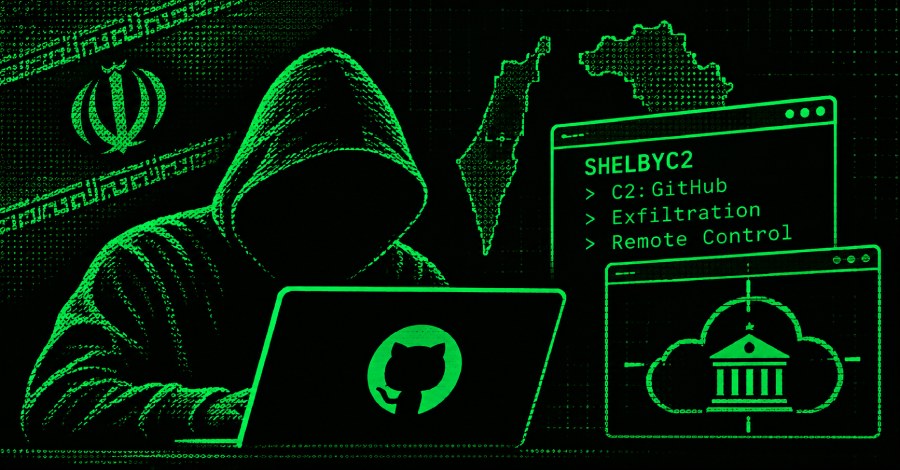
An advanced cyber espionage campaign orchestrated by Iranian state-aligned threat group DarkBlinders has compromised high-profile targets in Israel and a government cloud environment in the Kurdistan Region of Iraq between August and October 2026. Researchers at Dream Research Labs confirmed the intrusion vector relied on sophisticated social engineering and complex developer tool abuse to bypass enterprise defenses.
- Core Development: Iranian-nexus group DarkBlinders targeted high-value individuals and government cloud infrastructure using trojanized coding challenges.
- Technical Shift: Cybercriminals leveraged AppDomainManager hijacking within malicious .csproj files to bypass Event Tracing for Windows (ETW) and execute secondary payloads.
- Industry Impact: Advanced deployment of ShelbyLoader V2 and SHELBYC2 using GitHub for command-and-control highlights growing risks to developer workflows and cloud environments.
Sophisticated Lures and AppDomainManager Injection
Active since at least September 2024, DarkBlinders (also tracked as CL-STA-1178 and REF8685) initially gained access through targeted spear-phishing messages. Intelligence from Palo Alto Networks Unit 42 revealed that attackers masqueraded as the Dubai Airports IT recruitment team starting in March 2026, luring targets with fraudulent job offers to execute trojanized applications.
The attack chain relies on multi-stage execution tactics to deliver custom malware while avoiding security detection: Attackers deliver a fake career portal questionnaire as a credible decoy before sending a malicious Microsoft Visual Studio project archive disguised as a technical assessment. Opening the malicious .csproj file triggers AppDomainManager injection, neutralizing ETW monitoring before using DLL sideloading to launch ShelbyLoader V2.
GitHub-Based Command-and-Control and Blackwood Tunneling
Once deployed, ShelbyLoader V2 executes SHELBYC2 (also known as AEROSTAT), a resilient backdoor that channels command-and-control (C2) operations, data exfiltration, and execution directives directly through legitimate GitHub repositories. Additionally, operators deploy a custom tunneling utility dubbed Blackwood to maintain persistent lateral access within compromised networks.
"The campaign is characterized by misuse of built-in developer tools and DLL sideloading. Attackers also used AppDomainManager hijacking to bypass security monitors like ETW."
Defensive Recommendations & Threat Mitigation
Security teams monitoring high-risk sectors in the Middle East are advised to inspect incoming software repositories and enforce strict execution policies on developer environments. Defensive postures should include auditing CLR configuration files for unauthorized AppDomainManager attributes, monitoring network egress toward public code repositories like GitHub, and restricting execution rights for unverified Visual Studio project dependencies.