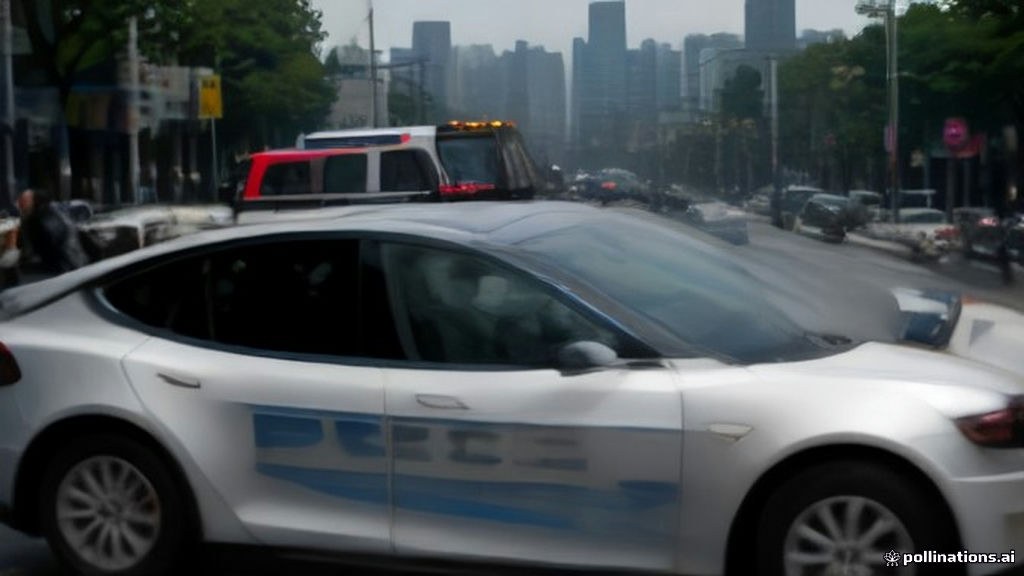
A Tesla driver caught asleep behind the wheel on Ottawa’s Highway 417 during Tuesday’s rush hour now faces a careless driving charge from the Ontario Provincial Police. The photo OPP shared shows a new-generation Model Y in traffic.
The charge carries a $490 fine and six demerit points on conviction. It’s at least the fifth time this year Canadian police have gone public with a sleeping Tesla driver, and it’s not a coincidence that it’s happening as “Full Self-Driving” gets better.
OPP East Region posted about the stop Wednesday morning. Police didn’t name the brand or the driver-assist system, but the message was clear: “even though your vehicle has an autonomous driving feature, drivers are still required to pay due care and attention when behind the wheel.”
According to OPP, the officer could see the driver’s eyes were closed and hands were off the steering wheel. Instead of lighting up the cruiser, police pulled in close to capture body camera footage first.
Careless driving isn’t a parking ticket in Ontario. The $490 is the set fine, but if the case goes to court, the Highway Traffic Act allows fines up to $2,000, up to six months in jail, and a licence suspension of up to two years.
Ottawa is the latest, but British Columbia has been dealing with this all year:
This isn’t new in Canada either. Back in 2020, Alberta RCMP went further and criminally charged a Tesla driver caught sleeping on Autopilot at 150 km/h with dangerous driving.
The U.S. has the same problem with less enforcement. In September, Colorado State Patrol got a report of a sleeping Tesla driver on I-70 near Georgetown and never found the car. The same month, Rep. Raja Krishnamoorthi pressed the DOT after NBC News found 43 videos of drivers apparently asleep in moving Teslas, 17 of them posted in 2026 alone.
And in October, a driver told CHP he was asleep on FSD when his Tesla drove into a closed crash scene and hit a patrol car in Fairfield, California. Two officers were seriously injured.
A few years ago, FSD needed an intervention every few miles, so nobody was napping. You couldn’t.
Now FSD can handle long highway stretches without a takeover, and that’s exactly when supervision breaks down. A human asked to watch a system that’s right 99% of the time stops watching. That’s automation complacency, and it’s one of the most studied problems in aviation and driving research.
Waymo learned this the hard way. In 2013, Google let employees use its highway driver-assist prototype and caught people falling asleep at highway speed. It decided a system that works most of the time but still needs a human to catch its mistakes was the worst of both worlds, and it went straight to driverless.