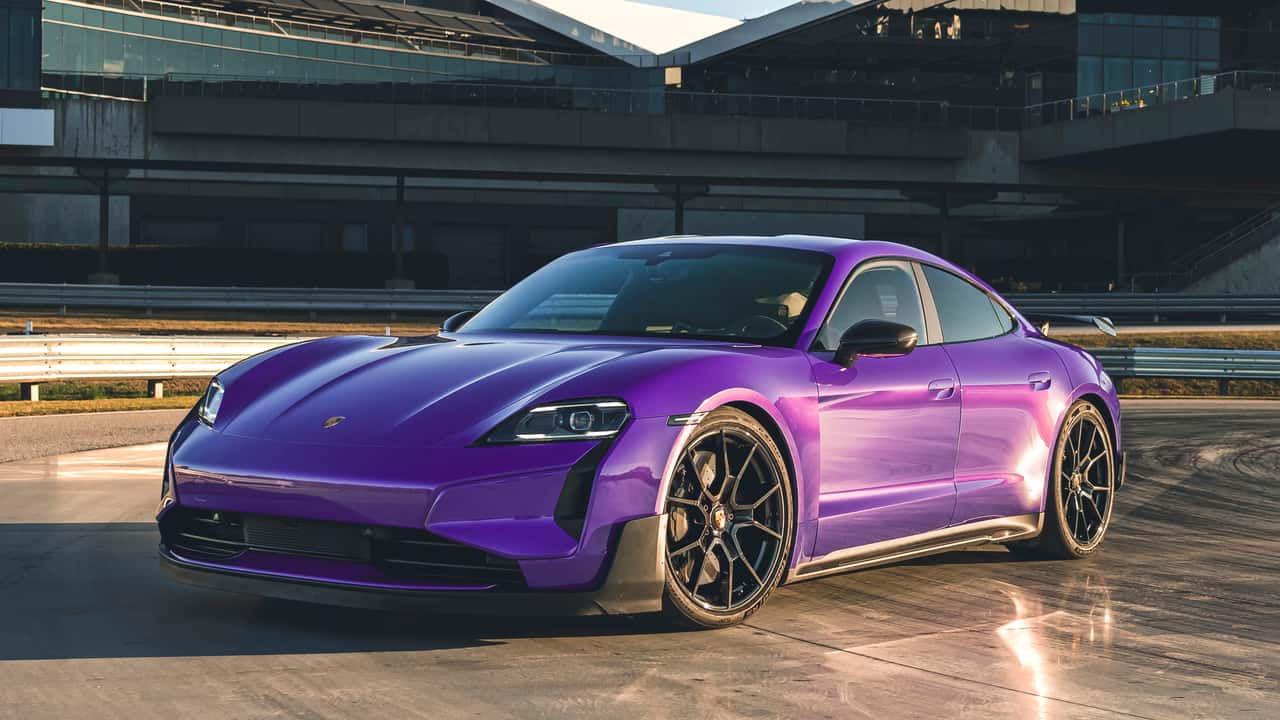
Every developer knows the pain of shipping a brilliant product only to realize the end-user environment is still running outdated legacy dependencies. That’s essentially the post-mortem coming out of Zuffenhausen regarding the Porsche Taycan. Porsche’s leadership is openly reflecting on their maiden voyage into the battery-electric vehicle (BEV) space, admitting that the Taycan was, in essence, a bleeding-edge v1.0 released into an ecosystem that just wasn't ready to parse it. While the EV is a triumph of German engineering, Porsche's brass believes they committed the classic tech sin: shipping ahead of the market's readiness curve.
When the Taycan dropped in 2019, it was a showcase of pure hardware flexing. Featuring an industry-first 800-volt system architecture—allowing for DC fast-charging speeds that made standard 400-volt platforms look like dial-up internet—the Taycan was built for a high-throughput future. However, the physical infrastructure layer failed to scale at the same velocity. Early adopters were left trying to run high-performance charging algorithms on public grids that were notoriously buggy, slow, and offline. The Taycan was ready to pull 270 kW of continuous power, but the surrounding node network was still stuck in the legacy era of broken CCS plugs and thermal throttling.
Furthermore, the cognitive load on traditional Porsche purists proved to be a major compatibility barrier. Transitioning a user base defined by flat-six combustion notes and manual gearboxes to instantaneous torque vectors and silent planetary gearsets required a massive UX paradigm shift. Porsche realized that while early adopters and tech-enthusiasts loved the low-latency throttle response and sophisticated thermal management logic, the mass market still had "range anxiety" hardcoded into their brains. It was a classic case of launching a highly optimized microservice before the legacy monolith users knew how to interface with it.
Despite the "not ideal" timing, Porsche isn't hitting Ctrl+Z on its electrification pipeline. Instead, they are refactoring. The telemetry and real-world data harvested from Taycan's early deployment have optimized the code for their upcoming portfolio, including the all-electric Macan and the highly anticipated electrified 718 twins. By treating the original Taycan as an ambitious, production-grade proof of concept, Porsche has successfully debugged the performance EV formula. Now, as the global charging grid slowly receives its long-overdue system upgrades, Zuffenhausen is poised to dominate the next deployment cycle.