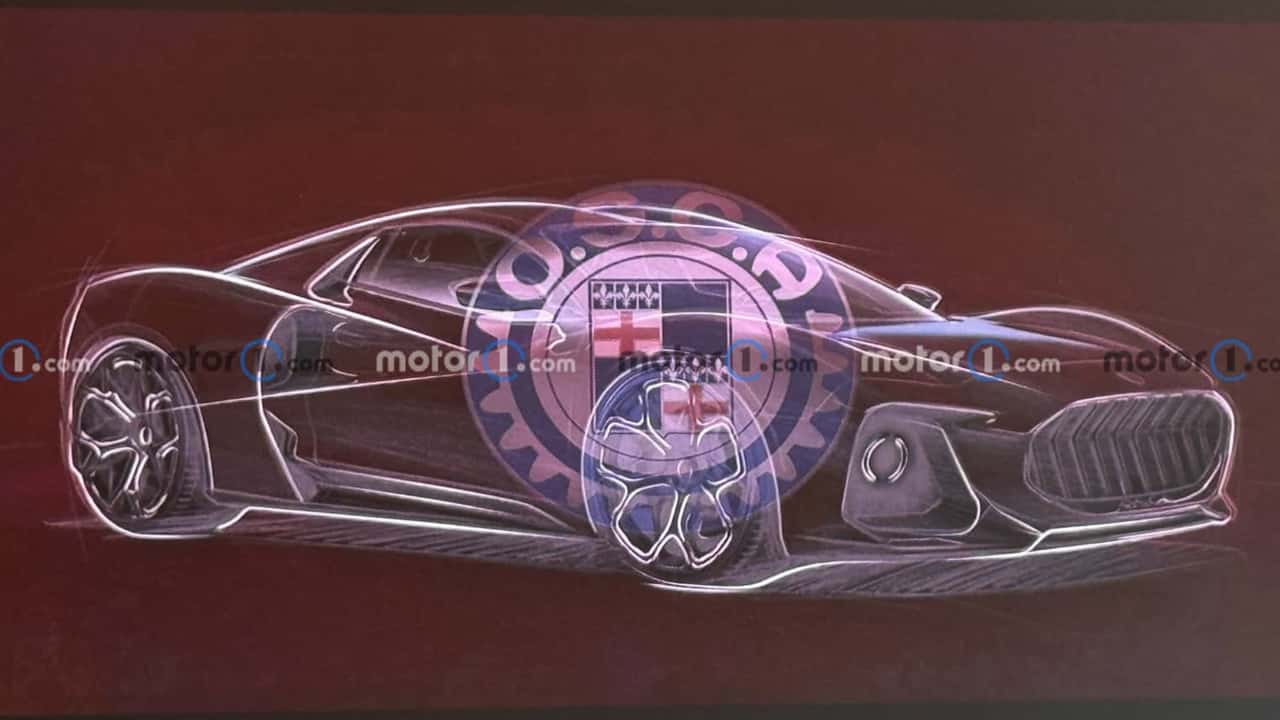
In the tech world, when a legendary software project goes dormant, a dedicated community eventually forks the repository to breathe new life into it. In the automotive universe, a similar spirit is resurrecting OSCA (Officine Specializzate Costruzioni Automobili). Originally founded in 1947 by the Maserati brothers after they parted ways with their namesake brand, OSCA was the ultimate boutique startup of its era. Decades after going offline, the brand is executing a hard reboot, pulling its legacy code out of deprecation and preparing to deploy a brand-new sports car designed for pure driving enthusiasts.
To ensure this modern deployment doesn't crash on launch, the resurrected OSCA isn’t building its hardware abstraction layer from scratch. Instead, they are compiling their new sports car on a platform with deep Lotus roots. Utilizing a lightweight, hyper-optimized chassis framework synonymous with the legendary British marque, the upcoming OSCA promises an incredibly high power-to-weight ratio. Think of it as running a lightweight Linux kernel on state-of-the-art silicon—no bloated subsystems, no unnecessary driver overhead, just raw, low-latency feedback between the driver and the asphalt.
Propelling this analogue machine is a high-performance V6 engine, a choice that strikes the perfect balance between classic mechanical symphony and modern efficiency. While the industry rushes to virtualize everything via electric drivetrains, OSCA is doubling down on tactile physics, configuring a powertrain that yields immediate throttle response and a high-RPM redline. It’s a beautifully optimized mechanical compiler that converts fuel into pure, unadulterated velocity, proving that some legacy protocols are simply too good to replace with digital emulation.
Ultimately, OSCA's return is the ultimate merge request for the automotive purist. By pairing classic Italian styling DNA with the legendary handling dynamics of a Lotus-derived chassis, this V6-powered newcomer is poised to disrupt a market saturated with heavy, over-digitized sports cars. It’s a nostalgic system restore executed with cutting-edge engineering precision, proving that great design never really dies—it just waits for the right developers to compile it again.