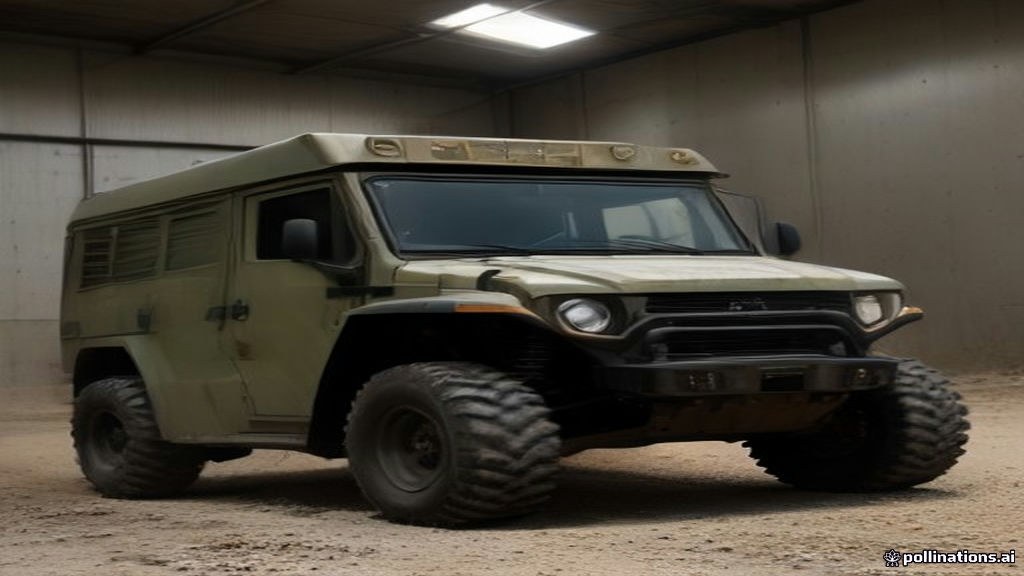
Renault Group has officially pulled the wraps off the Forefront Concept, an advanced all-electric, all-wheel-drive modular military vehicle developed in collaboration with defense specialist John Cockerill to redefine tactical mobility and remote operations in high-risk zones.
- Core Development: The cab-less dual-motor EV delivers a projected range of 250 miles (400 kilometers) with a 1-tonne (2,200-pound) payload capacity.
- Technical Shift: Combines proven commercial automotive components with autonomous driving and remote-operation capabilities designed alongside the French armed forces.
- Industry Impact: Signals a major pivot toward electrified, uncrewed logistics and combat support vehicles that mirror global defense trends.
Powertrain Architecture and Silent Mobility
Built using off-the-shelf automotive components to keep manufacturing costs low and production timelines short, the Forefront Concept relies on a robust dual-motor configuration. This layout enables full-wheel steering and allows the tactical machine to traverse severe terrain in complete silence. While the baseline battery architecture yields an estimated 250 miles of range, the vehicle supports an optional range extender for extended deployment windows. Designed with a modular approach, the platform can seamlessly pivot between logistical support, anti-drone defense, fire support, and medical evacuations without risking human lives in contested environments.
"As battlefields transform into spaces where machines handle high-risk tasks under remote human oversight, vehicles like Renault’s Forefront will become essential assets across modern defense strategies."
Autonomous Operations and Defense Integration
The vehicle's sophisticated autonomy and remote-operation software were engineered by John Cockerill, incorporating direct feedback from the French armed forces. In the coming weeks, the Forefront Concept will undergo rigorous field exercises and operational trials to evaluate its real-world performance. Renault plans to refine the platform dynamically based on military telemetry and feedback. Beyond military theaters, the rugged architecture holds profound commercial potential for civilian enterprises needing safe access to hazardous industrial or disaster zones.
Industry Outlook & Next Steps
Global interest in uncrewed ground vehicles is surging, putting Renault in direct competition with international defense initiatives. In the United States, for instance, the Army recently awarded an 18-month contract to American Rheinmetall to build an uncrewed ground vehicle utilizing a plug-in hybrid architecture capable of over 500 miles of combined range and up to 18,000 lbs of payload capacity. As defense procurement accelerates toward electrification and automation, the commercial viability of Renault's boxy, scalable platform will depend heavily on upcoming field trial results and global market demand.